Eight Sleep ❤️’d this article so much they agreed to sponsor it.
Eight Sleep has been covered by T3, TrendHunter, and NewsMinimalist.
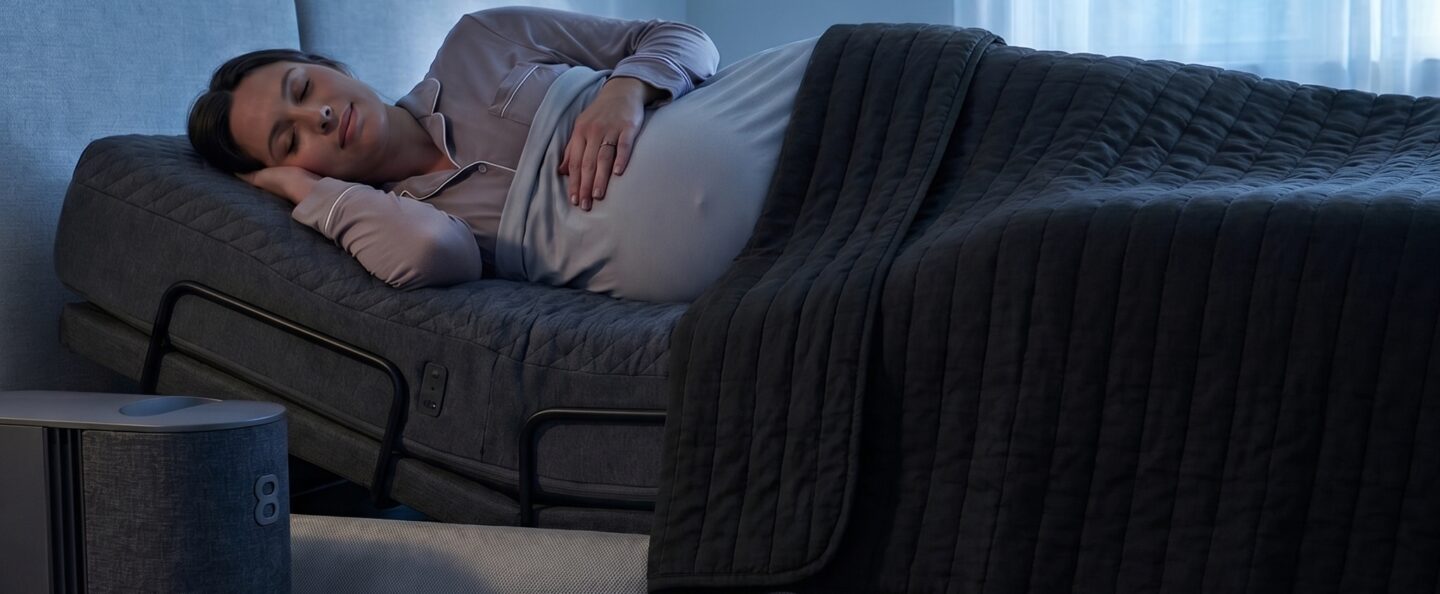
Week 32 is when my bed became a toaster oven. I’d kick the covers off, sweat through a tank top, then wake up forty minutes later shivering. My husband — the kind of guy who pulls the blanket over his head in August — would not be unsticking himself from any blanket war. We were one bad night away from him taking the couch out of self-preservation. That was the night I flipped on Pregnancy Mode.
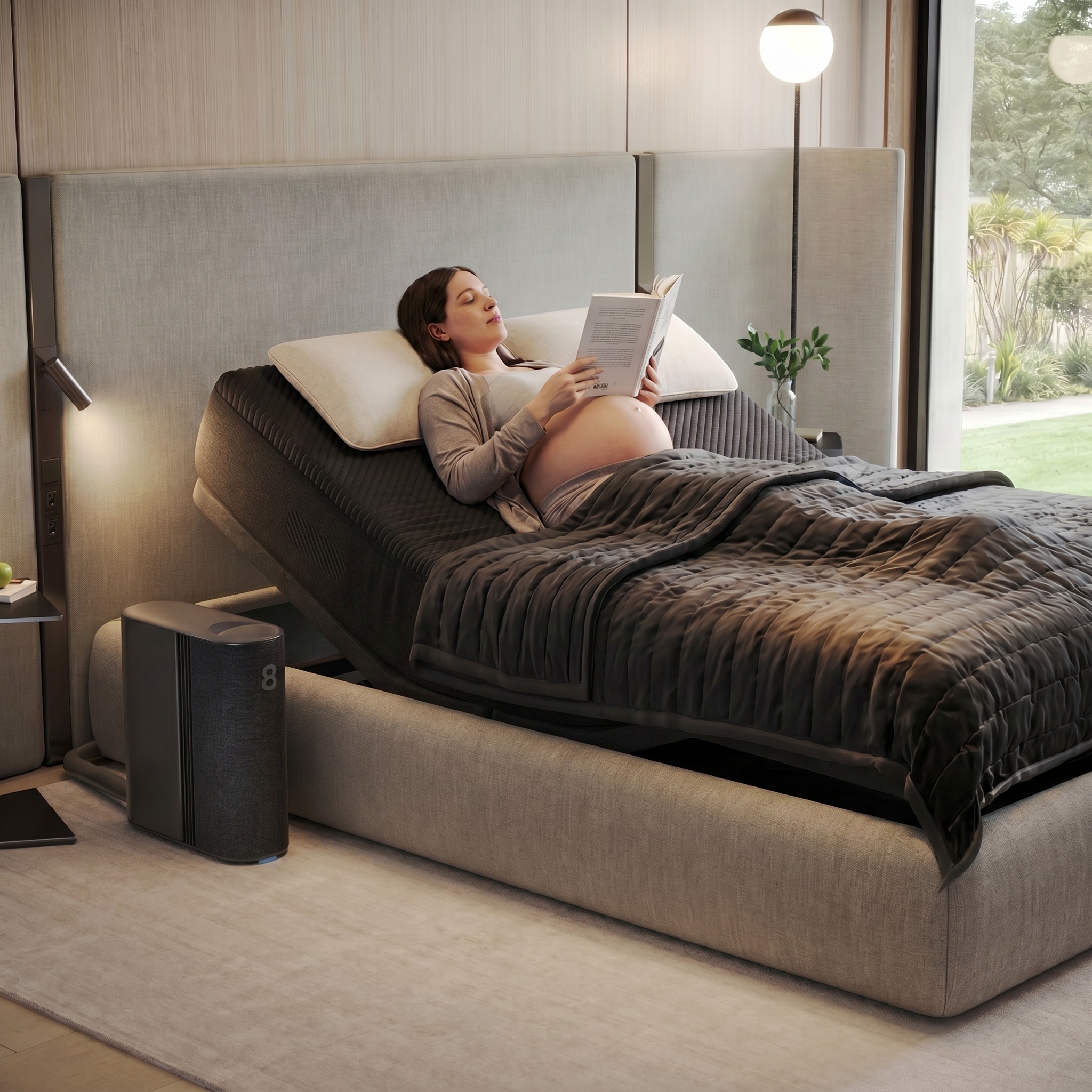
Third-trimester nights, finally quiet
Here’s the gist: Pregnancy Mode lives inside the Eight Sleep app and quietly adjusts your Pod’s bed temperature week by week, so you’re not dragging yourself out of bed at 3 a.m. to fiddle with a slider in the dark. Eight Sleep covers the full runway on the Pregnancy Mode page — early pregnancy through 24 weeks postpartum — and they’re upfront that it isn’t FDA-cleared. I appreciated that. I didn’t want a medical device pretending to be a comfort product, or vice versa.
The way it worked for me: cool preheat (which felt like the bed was politely saying come in), a gentle warm-up when my hands and feet went arctic around 2 a.m., and another nudge upward right before my alarm. None of it was dramatic. That was the point.
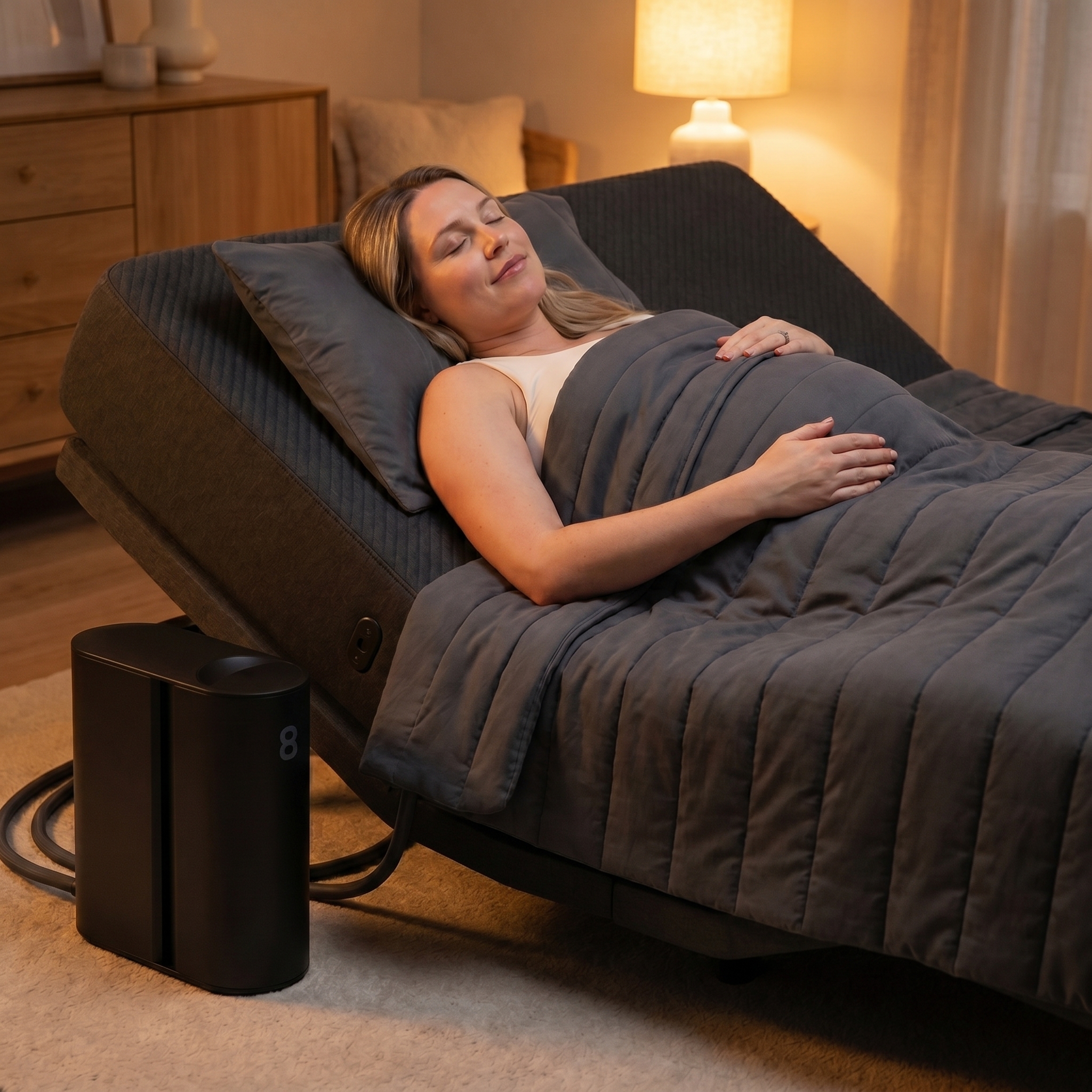
Diary, week 28 to 40
Week 28: I woke up once. One time. I genuinely thought my watch was broken. My husband kept his side glacial while I crept warmer toward dawn, and for the first time in months neither of us was awake at the same hour. The dual-zone thing isn’t a marketing line — the Pod runs from 55°F to 110°F per side with no wearables required, per the Pod product page, and that’s exactly how it behaved.
Week 34: The hot flashes came back with a vengeance. I tapped Hot Flash Mode in the app, got a fast cool-down, and then let Autopilot ease me back to the regular curve. No sliders, no math, no kicking sheets onto the floor. Eight Sleep specifically built Pregnancy Mode to play nice with Hot Flash Mode, and it just worked.
Week 36 to 40: Naps multiplied, my back filed a complaint, and most nights I tossed like a rotisserie. But the wake-ups were all baby-related, not heat-related — bathroom trips, heartburn, the occasional small human practicing tap dance on my bladder. The temperature shifts stayed gradual enough that I never woke up because of them. On the new feature post, Eight Sleep walks through the week-by-week automation through 24 weeks postpartum. That matched my experience to the letter.
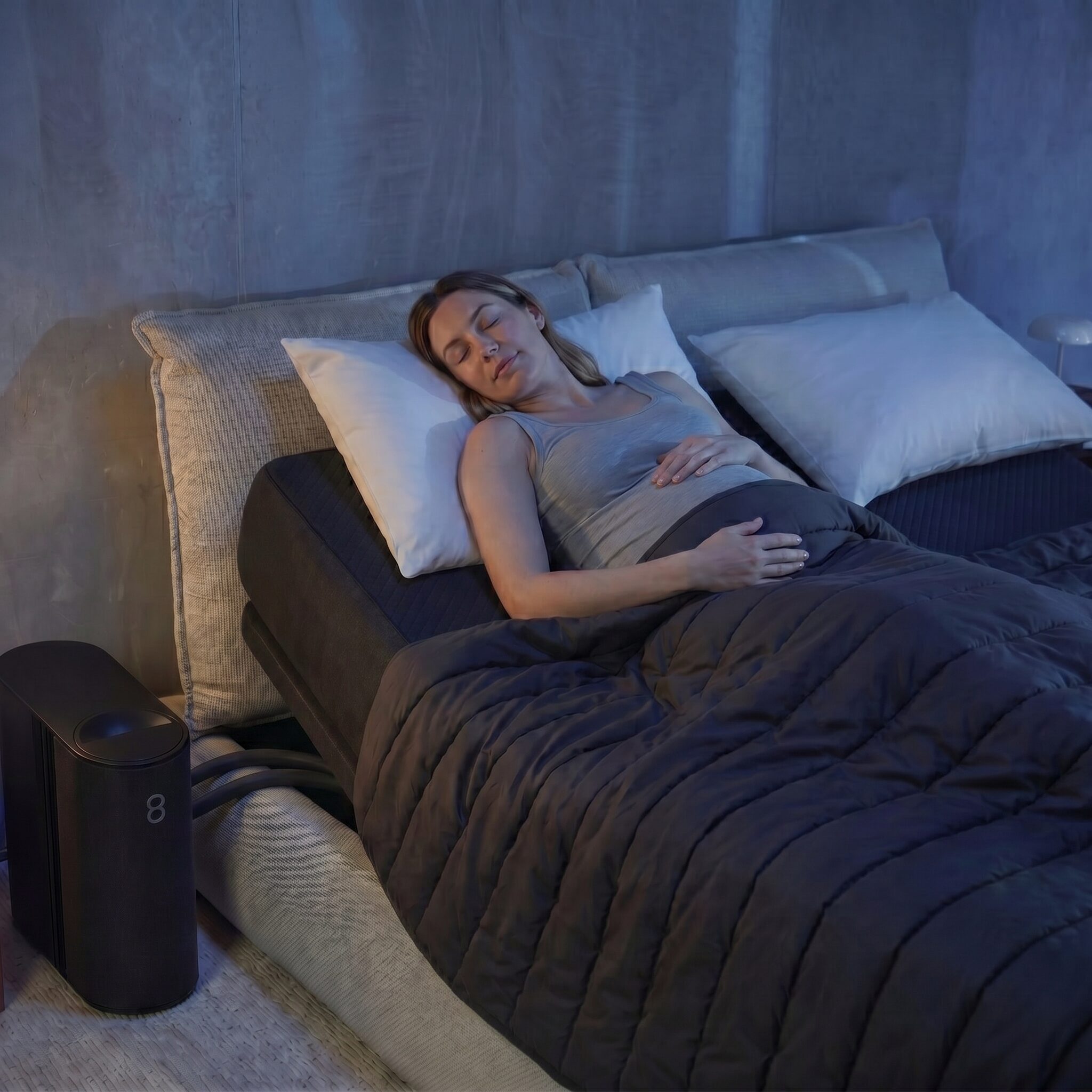
How temperature automation actually felt
Honestly? It felt like nothing. Which is exactly the compliment I’m trying to pay it. Pregnancy Mode moves in micro-increments I never would’ve dialed in by hand — half a degree here, a quiet bump there. Preheat felt like a polite invitation to bed. Mid-sleep was just steady. The pre-wake warm-up meant I unrolled myself in the morning instead of peeling myself off the mattress. The Pregnancy Mode overview says it adapts week by week. It does.
And because it’s dual-zone, my husband stayed on his preferred polar curve all night long. No passive-aggressive blanket grabs, no thermostat negotiations, no fake compromise where one of us suffers for the other. Two curves, one bed. The Pod details page walks through the dual-zone setup if you want the technicals.
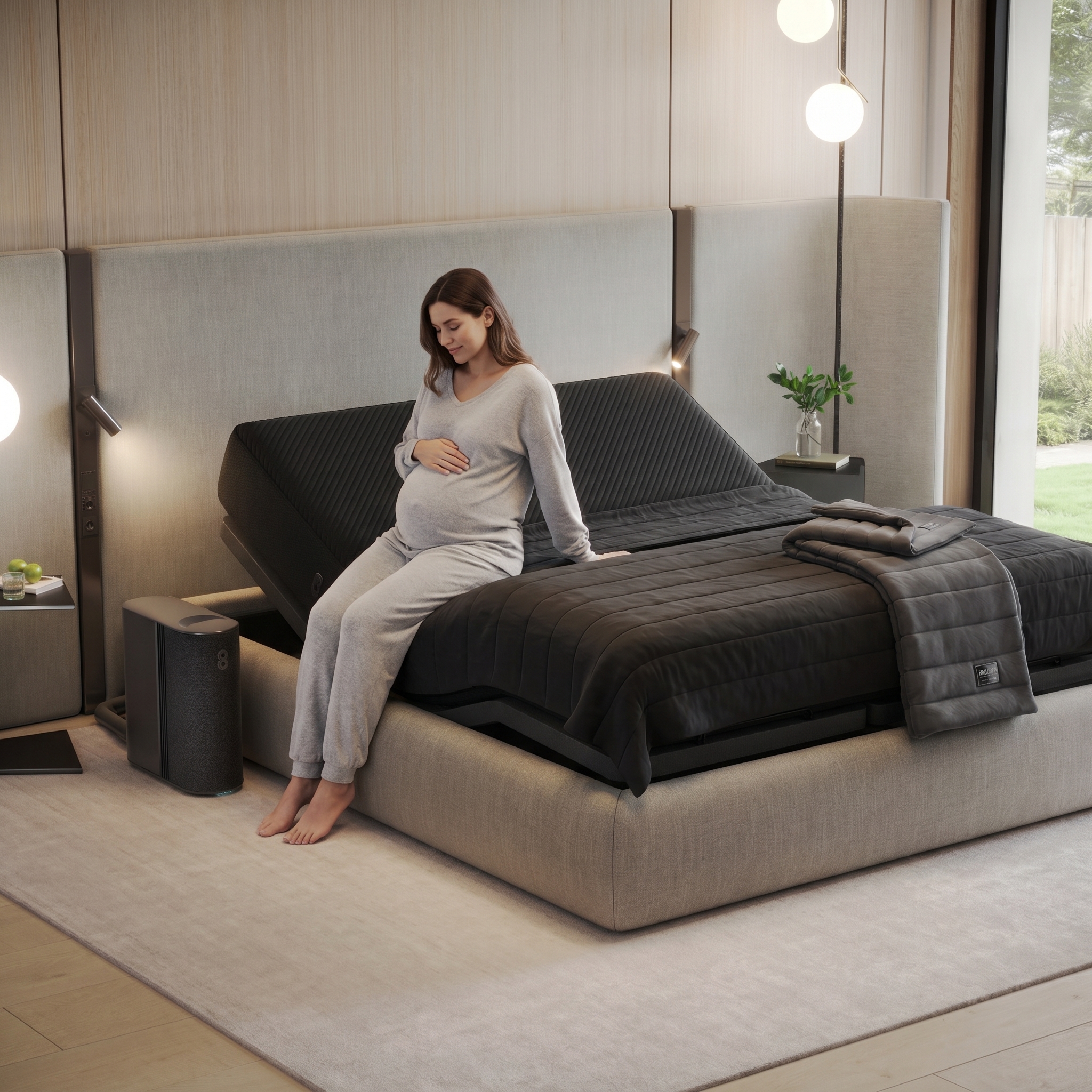
Postpartum: the 24-week runway back to me
Here’s the part I didn’t expect to need most. After delivery, my body’s thermostat completely re-wrote itself. Cluster feeds, hormone drops, night sweats that arrived like a freight train — and there’s Pregnancy Mode, still quietly doing its thing, tilting cooler when I overheated and easing back warm for catnap recovery. The launch write-up confirms the mode runs for 24 weeks postpartum, and that runway turned out to be the gentlest piece of postpartum tech in our house.
Hot Flash Mode also became my best friend in those first few weeks. One tap, the bed cools fast, no app spelunking required. Felt like opening a window without waking the baby. Genuinely.
The data that kept me calm
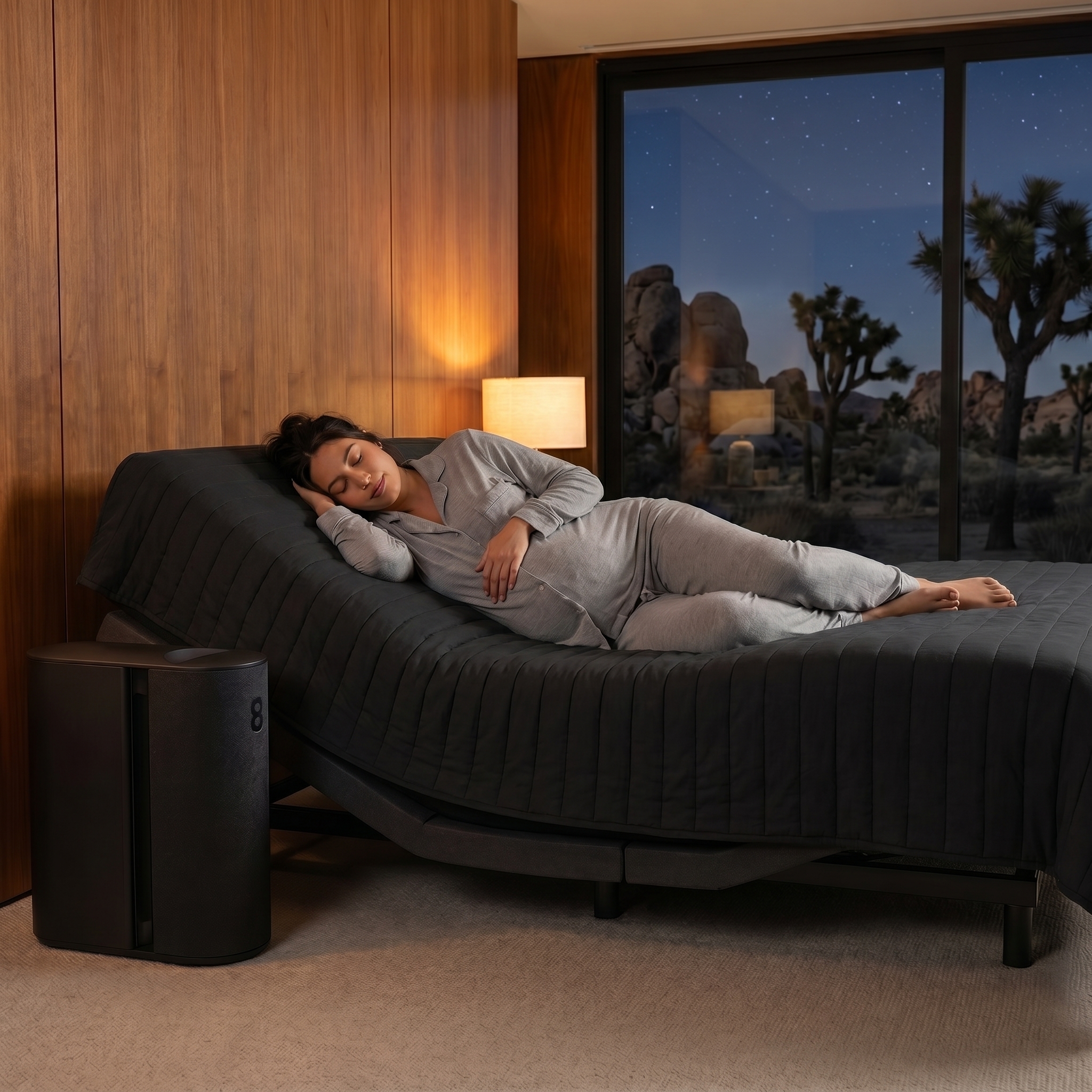
I didn’t want a gadget playing OB. I wanted context. And that’s what the app gave me — heart rate, HRV, respiratory rate, sleep stages, snoring — all stacked against my pre-pregnancy baseline and typical pregnancy ranges. The Pregnancy Mode blog spells the insights out and is crystal clear that this isn’t an FDA-cleared device. I treated it like a comfort compass and saved the actual questions for my OB.
Watching my HRV bottom out in late third trimester and then climb back up postpartum was weirdly grounding. It made the chaotic-feeling stuff feel seasonal instead of alarming. Like, oh — this is supposed to be this hard right now.
Setup, noise, and partner peace
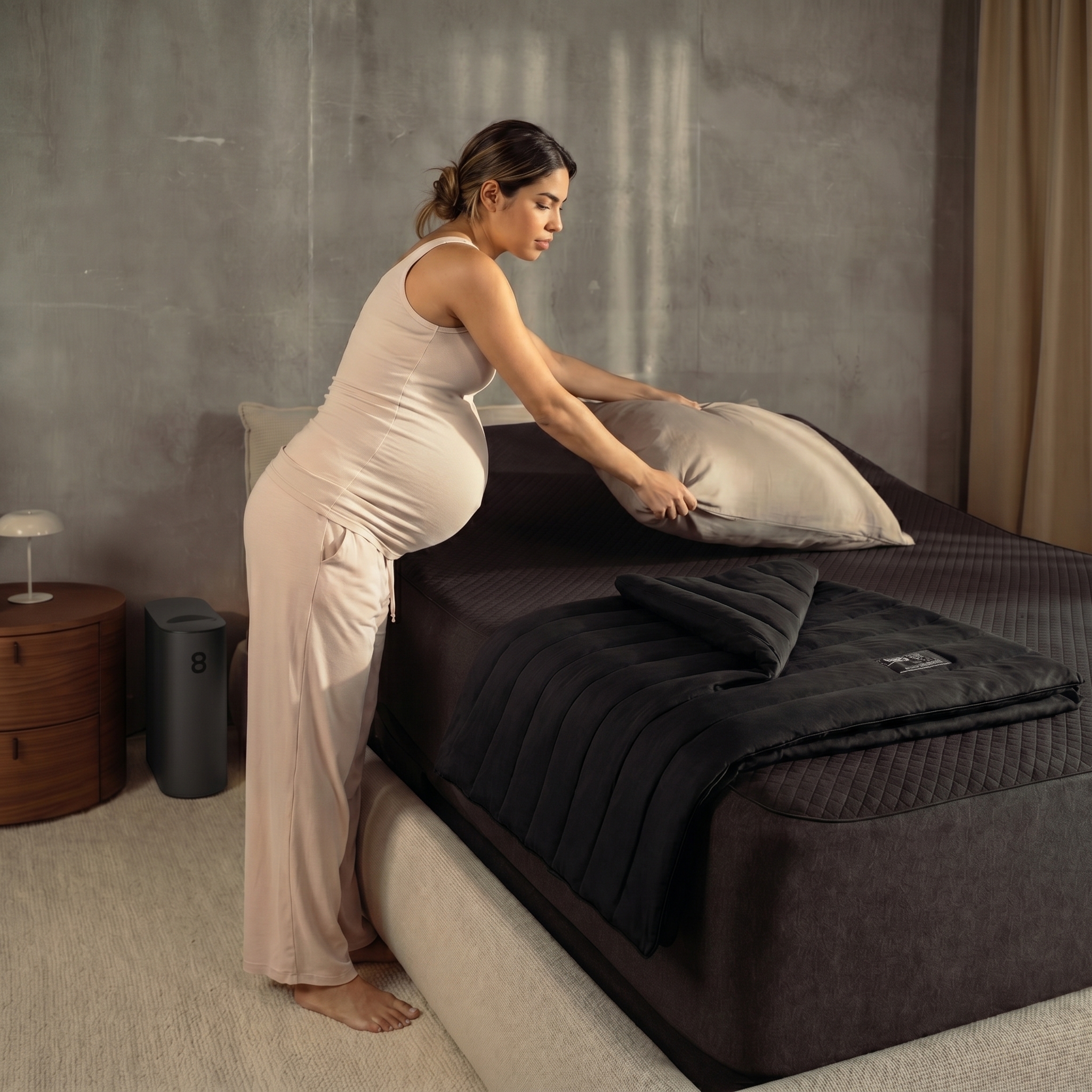
Setup was honestly kind of underwhelming, which I mean as the highest praise. Plug the Hub in, fill the water tank, connect the app, done. Eight Sleep calls the platform hydro-powered and quiet on the Pregnancy Mode info, and after we bled the air out on the first run, the Hub just disappeared. It’s not zero noise, but it’s white-noise-machine quiet, and at 3 a.m. that’s the difference between bliss and homicide.
The partner-peace thing is the part nobody warned me about. Once we both got our own curves, the marriage moved on to other arguments — like who’s loading the dishwasher this week. Progress.
Cost talk, trials, and the fine print I actually checked
Yes, this thing costs real money. As of writing, the U.S. Pod 5 Queen page lists $2,898, plus the first 12 months of Autopilot membership required — tiers laid out by year on the Pod page. The cover has the sensors built in, so no wearable on your wrist at night, which when you’ve already got a sleep-tracking-fueled phobia of charging cables feels like a small mercy.
I came in with the 30-night trial as my safety net. Return within 30 days, full refund on the Pod and the membership, free shipping both ways — the whole deal is on the return policy. We kept ours. But I saved the box, because I’m not stupid.
The other thing I dug into: warranty. Water-based anything makes me nervous around an infant, so I looked it up. Standard is 2 years. Enhanced or Elite membership tiers stretch device replacement coverage to 5 years, per the Enhanced tier and Elite tier pages. Terms apply, of course. I screenshotted the parts I actually cared about and slept fine on it.
Where it fits among alternatives
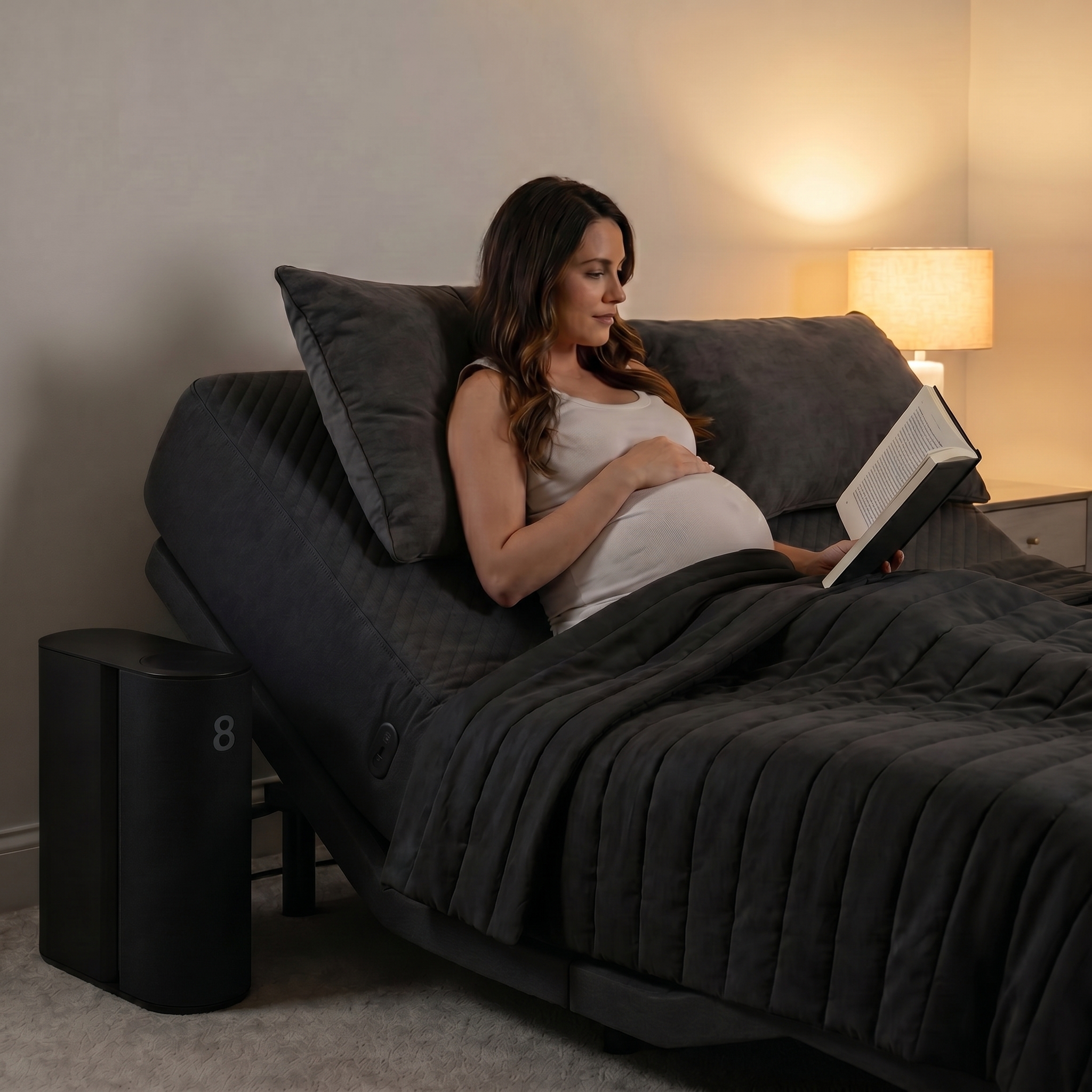
Friends in my group chat asked why not just get a cheaper cooling pad, or one of the air-based systems. Fair question. For me, the differentiator was the life-stage piece — week-by-week automation through pregnancy and 24 weeks postpartum. The Pregnancy Mode explainer anchors that to real pregnancy sleep data, and the App Store notes call out the new Pregnancy and Postpartum modes specifically. I didn’t want a generic cool blast. I wanted something that knew the assignment was going to keep changing.
- Temperature shifted automatically by week, not just by night.
- Hot Flash Mode handled the sudden spikes without nuking my schedule.
- Biometrics gave me context against pregnancy norms — not diagnoses.
- Dual-zone kept the marriage out of the thermostat argument entirely.
- 30-night trial with free returns if it’s not your thing.
If you are weighing it right now
Ask yourself one question: is temperature your main nightly disruptor? If yes, the Pod’s 55°F–110°F dual-zone setup on the Pod overview targets that directly. If cost is what’s keeping you up (ironic), the risk-free trial on the returns page exists for exactly this kind of decision. And if you’re the medical-cautious type — same — the feature announcement is upfront that this isn’t FDA-cleared. Treat it as a comfort tool, loop in your clinician, move on.
The version of this I sent to my group chat was way shorter: it cooled me when I needed it most, kept cooling when the hormones went off the rails, and gave me just enough data to feel okay about the weirdest sleep stretch of my life. Not a miracle, not a medical device — just a steady, helpful nudge in the direction of rest. Which, in third trimester, felt like a miracle anyway.