
 Sans So Much, We Convinced Them to Sponsor This Post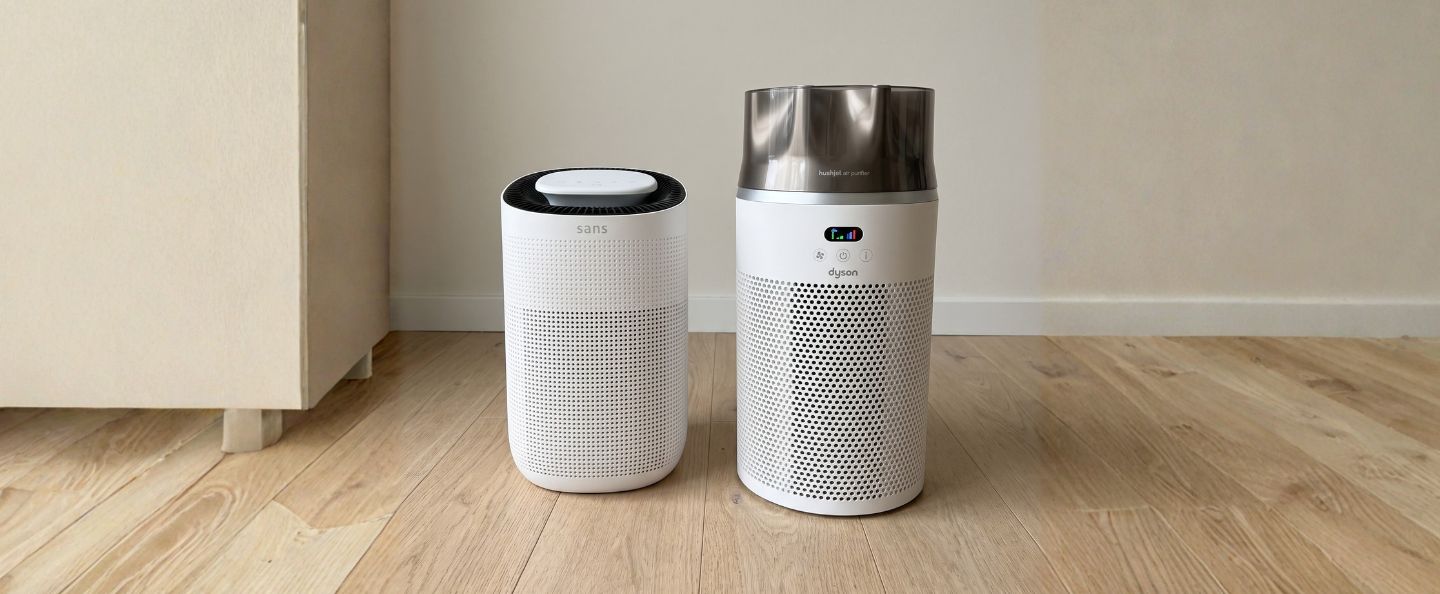
In Our Industrialised, Over-Polluted World… Clean Air Is Hard to Come By.
Between damp Victorian conversions, main road fumes drifting through single-glazed windows, and a hay fever season that seems to start earlier every year, keeping the air clean at home is harder than it should be.
That’s why these compact air purifiers have become increasingly popular. They’re affordable, they clean the air without taking up too much space… they help reduce the everyday build-up of dust, odours, and airborne particles indoors. Two of the most talked-about names in the compact category right now are the Sans Air Purifier Mini and Dyson’s HushJet Compact Purifier.
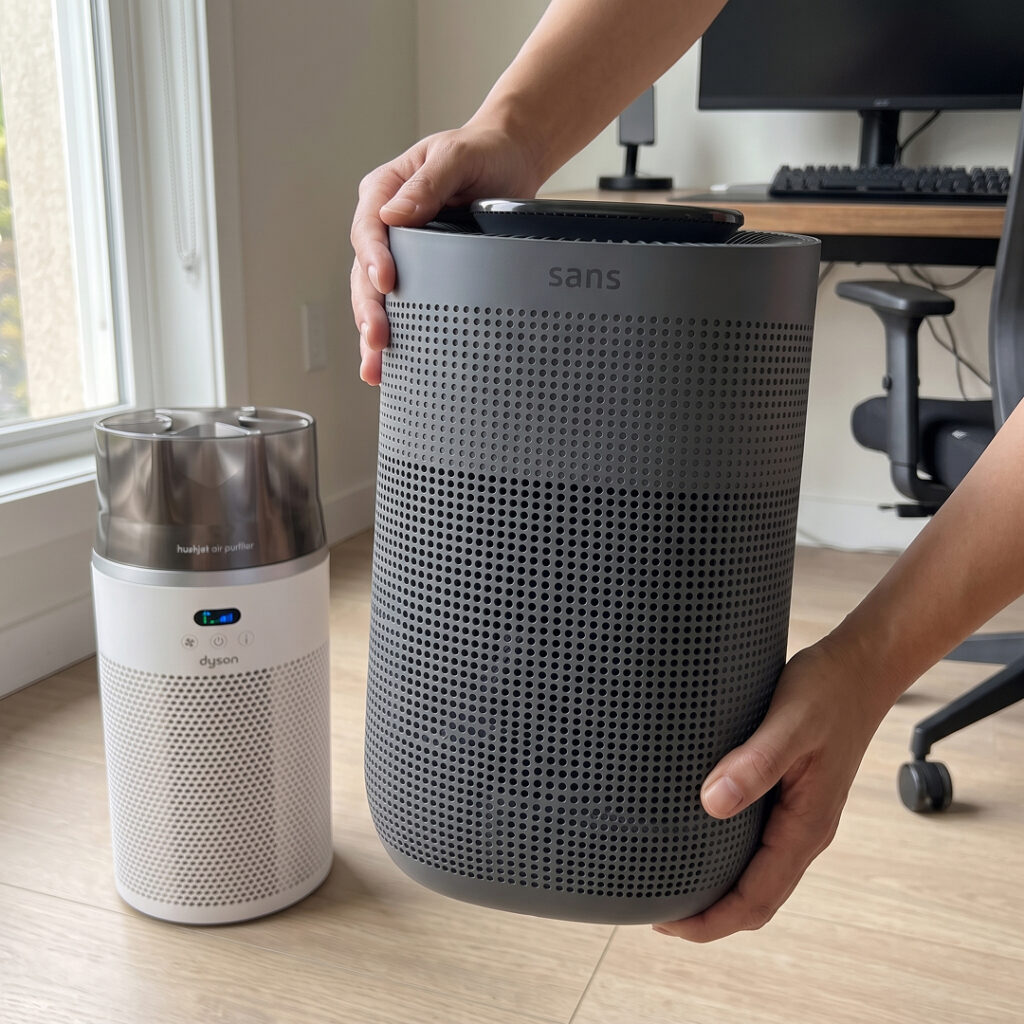
Both are pitched as small-footprint, big-impact purifiers for bedrooms, nurseries, and flats. But once you put the spec sheets side by side, the differences are more meaningful than the product pages first suggest.
To make the comparison useful, we decided to break it down into three categories (price, effectiveness, and reviews) to see which purifier deserves a spot in your home.
Meet the Contenders
Dyson needs no introduction. The engineering-obsessed British brand behind the bagless vacuum and the £300 hairdryer expanded into air purification years ago, and the HushJet is its newest, smallest purifier, built around a star-shaped nozzle borrowed from jet engine design, meant to project purified air further while running quieter.
Sans, by contrast, is the newer name: a brand founded during the pandemic by Adam Bedford and John Fanelly with a single obsession: professional-grade air purification that doesn’t look like hospital equipment. The Mini is its smallest unit, built for bedrooms, nurseries, and smaller living spaces, and it’s made an impression right away for its professional-grade, HEPA filter effectiveness and chic, modernist design. Forbes, Architectural Digest, and countless customers have taken notice of Sans, instantly establishing it as one of the most sought-after devices on the market.
Both units promise whisper-quiet, whole-room purification in a body small enough for a bedside table. But here’s where they actually differ.
Price: Sans
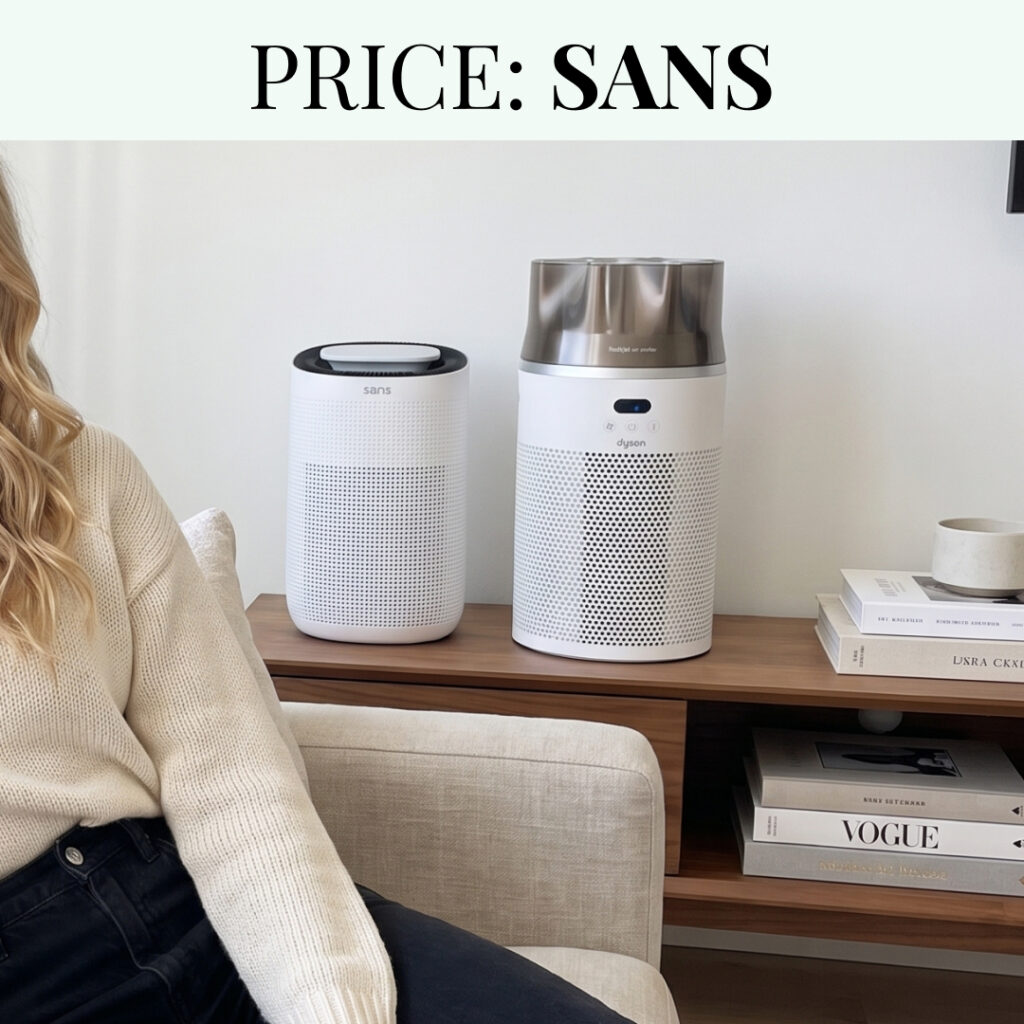
The Sans Air Purifier Mini is currently £174.99 (down from £199.99 as part of Sans’ Summer Sale). The Dyson HushJet is £349.99… double the price, before you’ve even opened the box. Sans also comes in four colourways (White, Midnight, Sand, and Agave), while Dyson only offers White/Silver and Black/Teal. But the real gap shows up in what happens after you buy.
- Filter Replacements: Sans‘ replacement filter is £26.99 every three months when you subscribe, working out to roughly £108 a year: predictable, and clearly listed. Dyson’s HushJet uses two filters: an electrostatic filter rated to last up to five years, and an activated carbon filter that needs replacing annually. Sounds low-maintenance in theory, except at the time of writing, both replacement filters are listed as out of stock on Dyson’s own website. Difficult to budget for a filter you can’t currently buy.
- Guarantees & Perks: Add in Sans’ three-year guarantee, 30-day home trial, and free delivery and returns, compared with Dyson’s standard two-year guarantee, and Sans comes out ahead on both upfront price and ongoing ownership costs.
Effectiveness: Sans
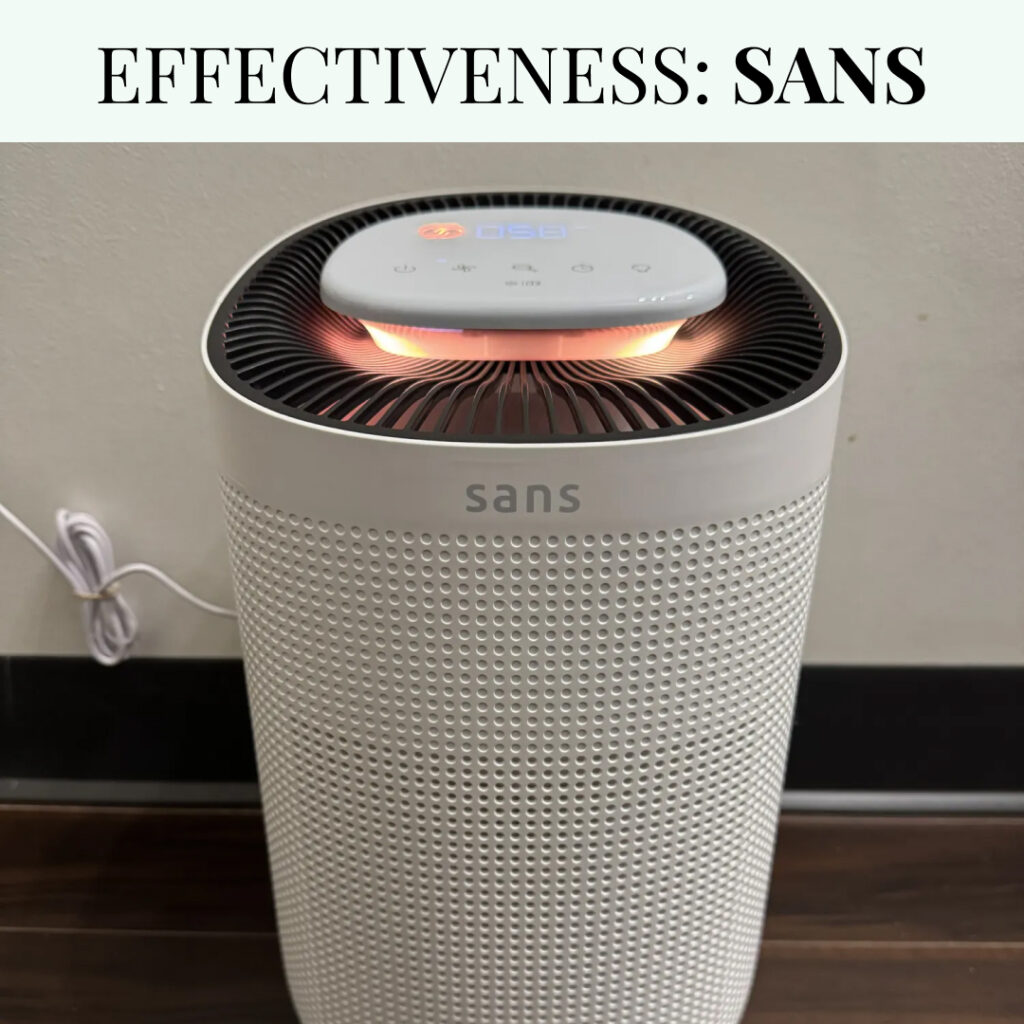
At twice the price, you might expect Dyson to have a clear performance advantage. On paper, that’s not obvious.
- Filtration Tech: Sans’ Air Purifier Mini uses true HEPA filtration, with activated carbon and a pre-filter, and is rated to capture 99.97% of particles down to 0.3 microns. It also includes an internal UV-C light as a final layer of defence against pathogens and is certified to be completely ozone-free. Sans lists the Mini’s coverage at up to 46 m² / 490 sq ft, with a CADR of 110 m³/hr.
- The Dyson Difference: Dyson’s HushJet uses what it calls “electrostatic filtration” rather than HEPA, also rated to capture 99.97% of particles down to 0.3 microns, but notably without a UV-C stage. Coverage is harder to compare directly because Dyson’s UK tech specs list the HushJet’s room coverage as 100 m³, which refers to room volume rather than floor area. If we assume a typical 2.4m ceiling height, that works out to roughly 42 m², slightly below Sans’ stated 46 m² coverage.
- Air Quality Monitoring: Sans also appears to give a fuller picture of what is actually in your air. The Mini tracks PM2.5, PM10, and VOCs, while Dyson lists PM2.5 and PM10.
That matters because PM readings only measure particulate matter. Sans’ VOCs capture gases and chemical compounds, which can come from things like cleaning products, paint, furniture, smoke, and everyday household odours.
It’s easier to trust tried-and-tested filtration technology like HEPA, an additional layer of UV-C light, and a single, consistent set of numbers. While these purifiers are technically rated at the same particle removal rate, we’re giving the nod to Sans because of this.
Reviews & Customer Love: Sans
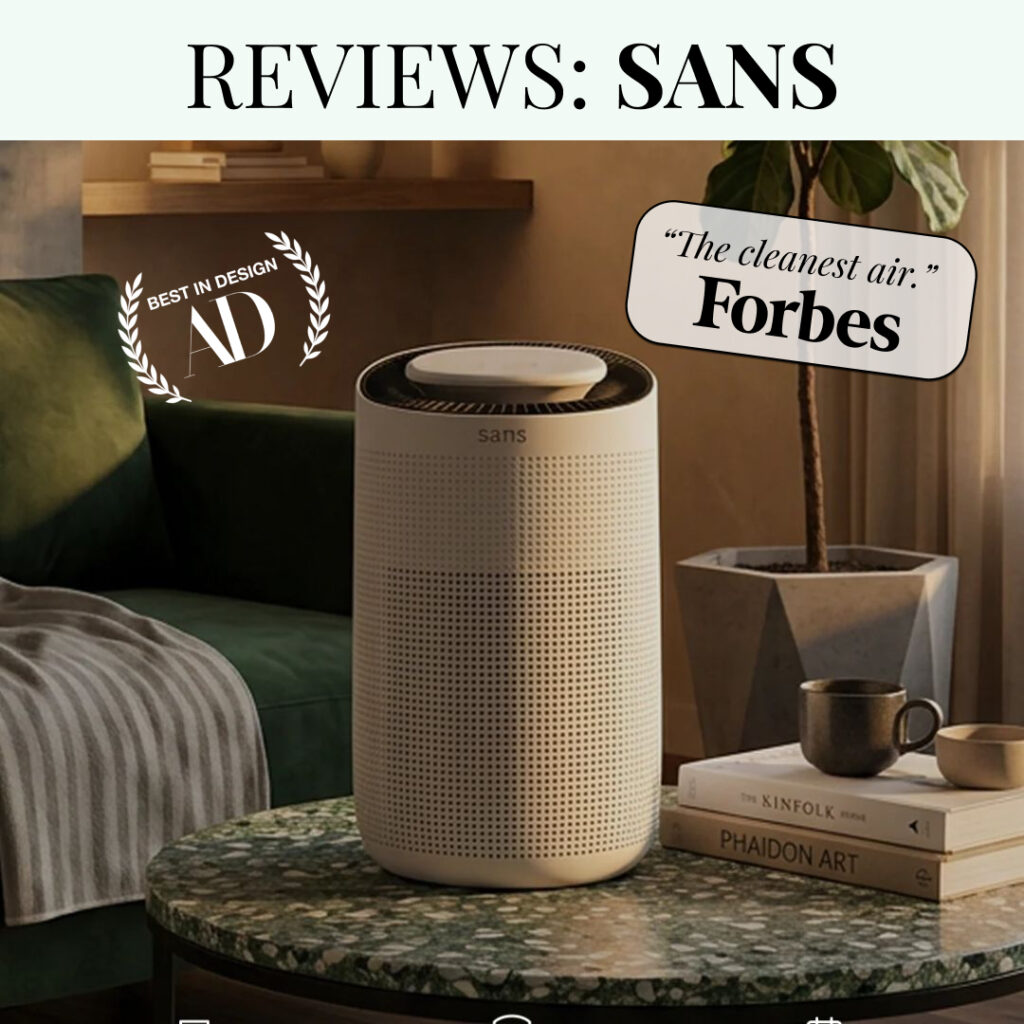
This is where Sans has a clear advantage.
- Sans Mini: Holds a 4.9 out of 5 average from 763 verified reviews. Customers repeatedly call out the same things: noticeably less dust, reduced odours, and how easy it is to forget it’s even running.
- Dyson HushJet: Sits at 4.1 out of 5 from 218 ratings, with 61% of reviewers saying they’d recommend it to a friend. Its reviews are more mixed: plenty of praise for the design and quiet operation, but a recurring thread of complaints around noise at maximum setting and, per some UK retailer reviews, concerns about filter availability once the included one runs out.
With more than triple the number of reviews and a meaningfully higher rating, Sans has the stronger review profile.
We Know Which One’s Getting Plugged In
Dyson built its name on vacuums and hairdryers, and the HushJet is a genuinely clever piece of engineering… but engineering isn’t the same as value. Once you look past the aerospace-inspired nozzle, you’re paying £175 more for a purifier with harder-to-compare coverage claims, no UV-C protection, and filters that aren’t currently available to buy.
Sans, meanwhile, delivers professional-grade HEPA filtration, a full pound of activated carbon, UV-C protection, and whisper-quiet performance… for half the price. Backed by a three-year guarantee and a 30-day home trial, the Sans Mini is also easier to try at home.